Posted by Roberta Grimes • September 26, 2026 • 2 Comments
Human Nature, Understanding Reality
Who can I turn to when nobody needs me?
My heart wants to know, and so I must go where destiny leads me
With no star to guide me, and no one beside me
I’ll go on my way and, after the day, the darkness will hide me
And maybe tomorrow I’ll find what I’m after
I’ll throw off my sorrow, beg, steal, or borrow my share of laughter
With you I could learn to, with you what a new day
But who can I turn to if you turn away?
With you I could learn to, with you what a new day
But who can I turn to if you turn away?
– Anthony Newley (1931-1999) & Leslie Bricusse (1931-2021) from “Who Can I Turn To?” (1964)
 At this point, when I have figured out everything that I have needed to figure out in order to understand death, the afterlife, and the greater reality around us, the foremost beneficiary of my many-decades-long habit of subscribing to popular-science magazines is my long-retired husband, who skims through all the paper versions of those magazines that still arrive in the mail. For my part, by now, I barely even look at the covers of the emailed versions, before deleting all the pop-sci magazines as they arrive each month. There never is anything of interest to me anymore; or, I suspect, to pretty much anyone else. For the most part, the scientific community is making small medical discoveries nowadays, and little details about how long dinosaurs’ strides must have been, a new species of small cat found in some jungle; just little oddities of nature here and there. And then, the cover of the October, 2026 issue of Scientific American made me pause before I hit the delete button. OMG, they came right out and named their own stupid, self-inflicted problem! Scientific American’s lead cover story for October is “Impossible Questions”, and it calls their three impossible questions “Where Science Hits a Wall.”
 Well, you and I don’t hit a wall where mainstream science does! Oh, not at all! The slam-their-heads-against-that-wall sheer frustration at their own helpless uselessness that we see expressed all over the front cover of the October, 2026 issue of what should be an esteemed popular-science magazine can be easily sorted out by any reasonably competent science hobbyist who does not feel constrained by mainstream science’s silly, but still ongoing obsession with the study of matter exclusively. We are going to answer Scientific American’s three “unanswerable questions”, but first we’ll need to answer a fourth problem that this October issue also mentions, despairingly, right there on its letting-it-all-hang-out front cover. That article is called, “The Desperate Hunt for Dark Matter”. And, notice the way they put it! Of course, they are desperate for what they have dubbed “Dark Matter” to turn out to be MATTER, and therefore fair game for scientists to study. Although clearly, what they refer to as “dark matter” is not “matter” at all, and I would argue that is going to be true, by definition.
 So, okay. Before we can answer those three “unanswerable” questions named on the October, 2026 front cover of Scientific American, we will first have to solve the magazine’s vexing dark matter riddle. What the matter-bound scientific community defines as “ordinary matter”, which is just what you and I can see, including even the stars, makes up only about five percent of the known universe. What scientists call “dark matter” makes up about 27% of the universe, or about 85% of the total “matter”; and what scientists refer to as “dark energy” makes up about 68% of the entire universe.And, wow, that is a whole lot of nothing! Why do they refer to it as “dark”? Why, simply because it doesn’t emit, absorb, reflect, or in any way react with photons of material light. Now, to you or me, that fact would suggest that the stuff simply cannot be material! Right? So, to call it dark “matter” is just a silly oxymoron, used to get around those scientific gatekeepers who still insist that working scientists must study matter exclusively.
So dark matter is, indeed, not matter. Hold that thought through our next paragraph.
 Because when we accept the fact that the way that dark matter won’t interact with photons of light likely means that it is not matter, we find a tremendous and growing body of evidence which suggests that we are probably right. Afterlife researchers, and also out-of-body travelers, including the very many people who by now have had near-death experiences (NDEs), have discovered a gigantic astral reality which exists in close proximity to this material reality, and appears to be by comparison even vastly greater than this whole material universe. To try to envision the relative sizes of this material reality and the astral reality, we might envision that this universe is one channel on a television set, and there might be as many as twenty other channels; so, for this universe to be just five percent of the whole of reality, and the other 95% to be dark to us because those other channels, the astral channels, are not made of conventional matter, would be about right. Those other channels include our afterlife, which is also our eternal home; and they include as well places that we visit while our bodies sleep, places that NDE-ers visit, weird non-human civilizations, and Lord knows what-all else! What we refer to as standard physics simply does not operate on any of those other channels, but rather what operates there is what we experience as consciousness, as physicist Max Planck discovered more than a century ago. But to simply assume that we are dealing with “dark matter” in any actual, earthly material sense, when the stuff that it is made of won’t react with material photons of light, is plain foolishness! Scientists have to call it “matter”, however. They have to call it “matter” in order for those funding their studies to grant them the funds to study it. However, yes, living consciousness, and in various forms, seems more and more likely to be behind it all, and perhaps in a singular, continuous form. Perhaps, as the inestimably great Max Planck long ago surmised, there is indeed one infinite, eternal Mind.
So, now let’s take Scientific American’s so-called Impossible Questions, one by one:
 Well, there you have it, my dear ones. Everything that is deemed by the cover of the October, 2026 edition of Scientific American to be sadly “beyond the wall” and out of reach of possible discovery for mainstream scientists has been put beyond that wall which the scientific gatekeepers themselves created, and which they have steadfastly maintained ever since. The original idea seems to have been to prevent any possible interference in pure science by religious ideas; but atheism itself is a religion, and materialism has proven to be appallingly limiting, when it has made the study of consciousness effectively impossible, and consciousness turns out to be such an important part of reality. Still, they could at some point have admitted their mistake and abandoned that materialist dogma. Instead, incredibly, they never have. It was the university physics departments, and the peer-reviewed scientific journals that decided early in the twentieth century to limit scientists to the study of matter alone. And in doing that, they created a nonsense wall that has gradually rendered ever more absurd and pathetic what should be the noblest of all modern professions! How stupid. And how very, very sad.
 The greatest scientific minds of even the late nineteenth century were still envisioning some wondrous adventures to come for scientists. After all, who could imagine those materialist fetters to come? To note just one remarkable example, that great polymath, Nikola Tesla, is known to have proposed a technology that went beyond transmitting mere thoughts. He called what he was working on in the late 1800s “television”—not to be confused with what we now know as television—Tesla’s imagined invention would let one “see at a distance” what another person was seeing in their mind. He figured that since vision involves excitations running from the retina up to the brain, perhaps imagination involved signals traveling from the brain back down to the retina. With a device capable of reading those signals off the retina, Tesla explained, “we may finally succeed in not only reading thoughts accurately, but reproducing faithfully every mental image.” We could even “project the images conceived on a screen and render them visible to an audience,” he said. He assured the world that he was working on it. Tesla was going to “convert the entire Earth into a huge brain.”
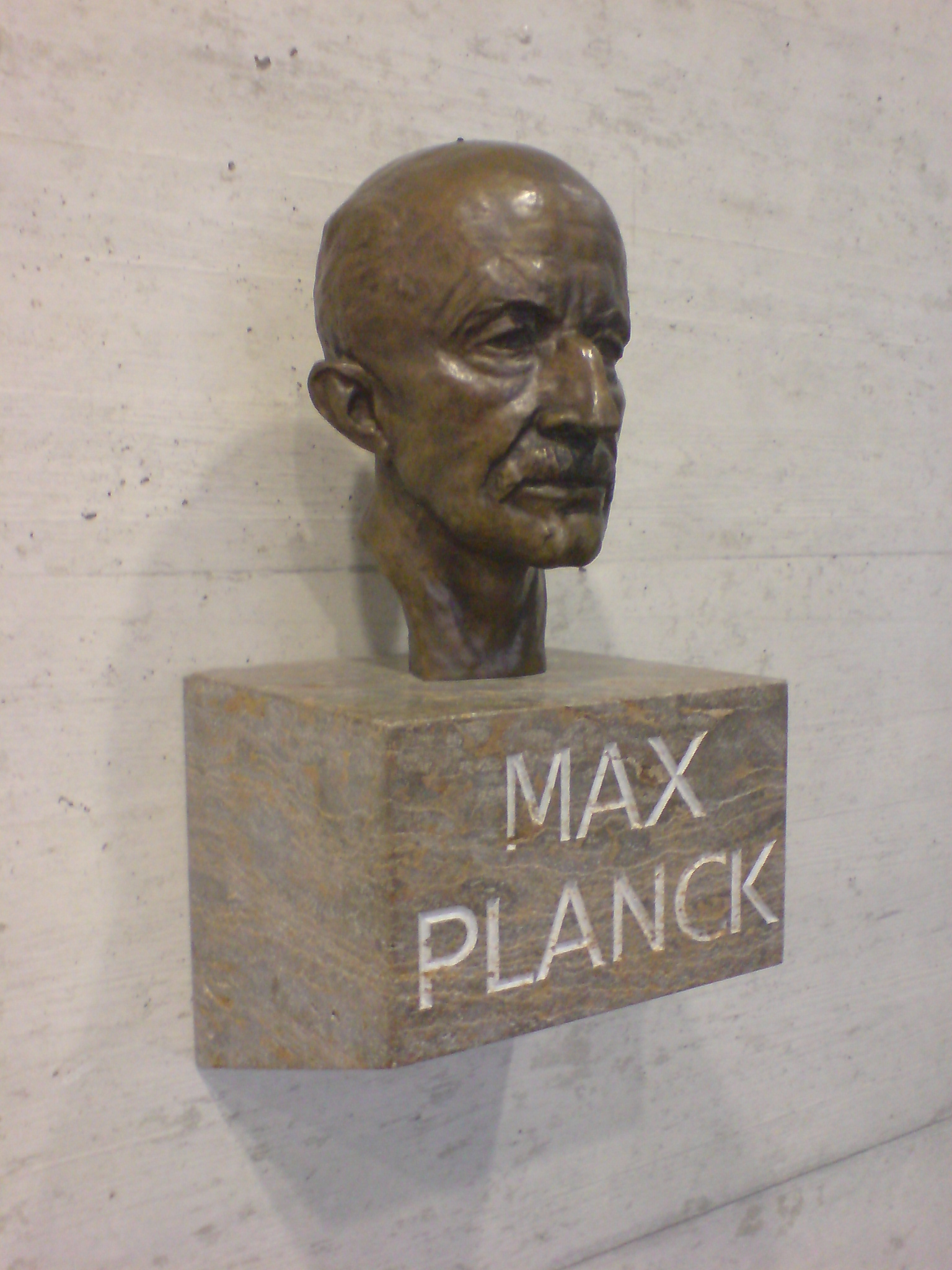 Then along came Max Planck and his fellow quantum physicists, soon after the turn of the twentieth century. What interests afterlife researchers about Dr. Planck’s work, of course, is not quantum physics so much, but it’s the fact that in the course of discovering this new mode of physics, Max Planck also discovered consciousness. In 1931, Dr. Planck said, “I regard consciousness as fundamental. I regard matter as derivative from consciousness. We cannot get behind consciousness! Everything that we talk about, everything that we regard as existing, postulates consciousness.” Wow. Then he said in 1944, “As a man who has devoted his whole life to the most clear-headed science, to the study of matter, I can tell you as a result of my research about atoms this much: There is no matter as such. All matter originates and exists only by virtue of a force which brings the particle of an atom to vibration and holds this most minute solar system of the atom together. We must assume behind this force the existence of a conscious and intelligent mind. This mind is the matrix of all matter.”
Even Albert Einstein agreed toward the end of his life that, “Concerning matter, we have been all wrong. What we have called matter is energy, whose vibration has been so lowered as to be perceptible to the senses. There is no matter.”
 Yet still, soon after the start of the twentieth century, those scientific gatekeepers decided that it made sense to turn mainstream science into the dogmatic religion of atheistic materialism, and that decision has become permanent. Ever since the 1920s or thereabouts, and for all the decades since that time, no trained scientist has managed to get hired by any reputable university, to get his useful research funded, or to get his work published in any peer-reviewed scientific journal unless what he was working on was related to the study of matter. And that is why that October of 2026 issue of Scientific American is so flat-out ridiculous on its face. Yes, every scientist working today is still blocked by a wall that keeps that scientist from researching most of what really matters now. Most of mainstream science has become a beside-the-point study of nature and archaeology! But that wall holding scientists back is paper-thin at this point, and inches tall. You can step right over it, dear scientist friends, and smash right on through it. Researching the whole truth is glorious!
 We who are not bound by useless and limiting scientific dogmas have discovered that consciousness is, of course, the predominant force in all of reality. Our dear friend Max Planck was right all along. He made the greatest discovery of the twentieth century, and it had nothing to do with quantum mechanics; it was instead the primacy and the great versatility of consciousness. And because consciousness is governed by what we experience as human emotions, Dr. Planck’s discovery makes it possible for afterlife researchers at last to understand how the reality that we enter at death ties with this smaller and much more limited material universe. And, very much more importantly, now we can see how what we experience as love is in fact, and to our unending wonderment, by far the most powerful force of all.
And maybe tomorrow I’ll find what I’m after
I’ll throw off my sorrow, beg, steal, or borrow my share of laughter
With you I could learn to, with you what a new day
But who can I turn to if you turn away?
With you I could learn to, with you what a new day
But who can I turn to if you turn away?
-Anthony Newley (1931-1999) & Leslie Bricusse (1931-2021) from “Who Can I Turn To?” (1964)
(Many photos are from Vecteezy.com)











A fake wall they have built. It doesn’t exist and one day, they will discover how much time, energy and money they wasted on constructing this foolishness.
A closed, dogmatic mind, can never advance and will bang its head against a wall it built.
But on the other hand, the foolish teachings of religion have also caused so much of this insistence on matter and atheism. I can’t blame scientists fully for this situation. I’m not into “blaming” but you probably understand what I mean.
No wonder Neale Donald Walsch wrote a book with the title: “God’s Message to the World” with as subtitle: “You’ve Got Me All Wrong.”
Science will discover God, but a different one we have been indoctrinated with for so long. And then the problem will be no longer to convince the scientists, but for religious people to see and understand God and reality quite differently.
The tables of corrected belief will be turned. Mark my words on this. Who will be more stubborn? How long before religious people will change from false beliefs to corrected ones?
yes indeed,if you hold your breath of life,AKA consciousness,you lose your consciousness, because that’s all ther is keeping us alive in our bodys,is consciousness, makes sense.