Posted by Roberta Grimes • April 11, 2026 • 6 Comments
Jesus, The Teachings of Jesus
I come to the garden alone,
While the dew is still on the roses;
And the voice I hear, falling on my ear,
The Son of God discloses.
And He walks with me, and He talks with me,
And He tells me I am His own,
And the joy we share as we tarry there,
None other has ever known.
He speaks, and the sound of His voice
Is so sweet the birds hush their singing;
And the melody that He gave to me
Within my heart is ringing.
And He walks with me, and He talks with me,
And He tells me I am His own,
And the joy we share as we tarry there,
None other has ever known.
– Charles Austin Miles (1868-1946), from “In the Garden” (1912)
 I have noted this fact often, but it cannot be repeated often enough: our much-beloved Jesus is, even to this day, not a member of the Christian religion of any denomination. In fact, no Christian religion existed until the Roman Emperor Constantine believed that he saw a cross in the sky, and he thought he heard a voice say, “By this sign you shall conquer”, so he took it into his head to organize the First Council of Nicaea of various leading followers of Jesus in the year 325 CE. There, Constantine’s minions created a first formal Christian religion around the symbol of the cross, and thereby they invented the first Roman Christian religion.
 What Jesus Himself professed during His lifetime on earth as His own religion was a strict form of Judaism. And He made no attempt to lure any of His followers away from Judaism, toward anything else! No indeed. In fact, Jesus’s teachings as they are preserved in the Biblical Gospels state specifically that He was preaching directly from the teachings of Moses. For example, Jesus said, “Do not think that I have come to abolish the Law or the Prophets; I have come not to abolish, but to fulfill. 18 For truly I tell you, until heaven and earth pass away, not one letter, not one stroke of a letter, will pass from the law until all is accomplished. 19 Therefore, whoever breaks one of the least of these commandments and teaches others to do the same will be called least in the kingdom of heaven, but whoever does them and teaches them will be called great in the kingdom of heaven. 20 For I tell you, unless your righteousness exceeds that of the scribes and Pharisees, you will never enter the kingdom of heaven” (MT 5:17-20).
Wow, Jesus was a well-educated Jew indeed for His day, strictly and by the Jews’ holiest of books, their Torah scrolls. So then it was His Disciples who led and taught the Way of Jesus after his crucifixion, resurrection, and ascension, as Jesus’s teachings spread rapidly around the Mediterranean Sea, and as far away as Rome. His followers remained for the most part Jews; because, as Jesus said, “I was sent only to the lost sheep of the house of Israel” (MT 15:24).
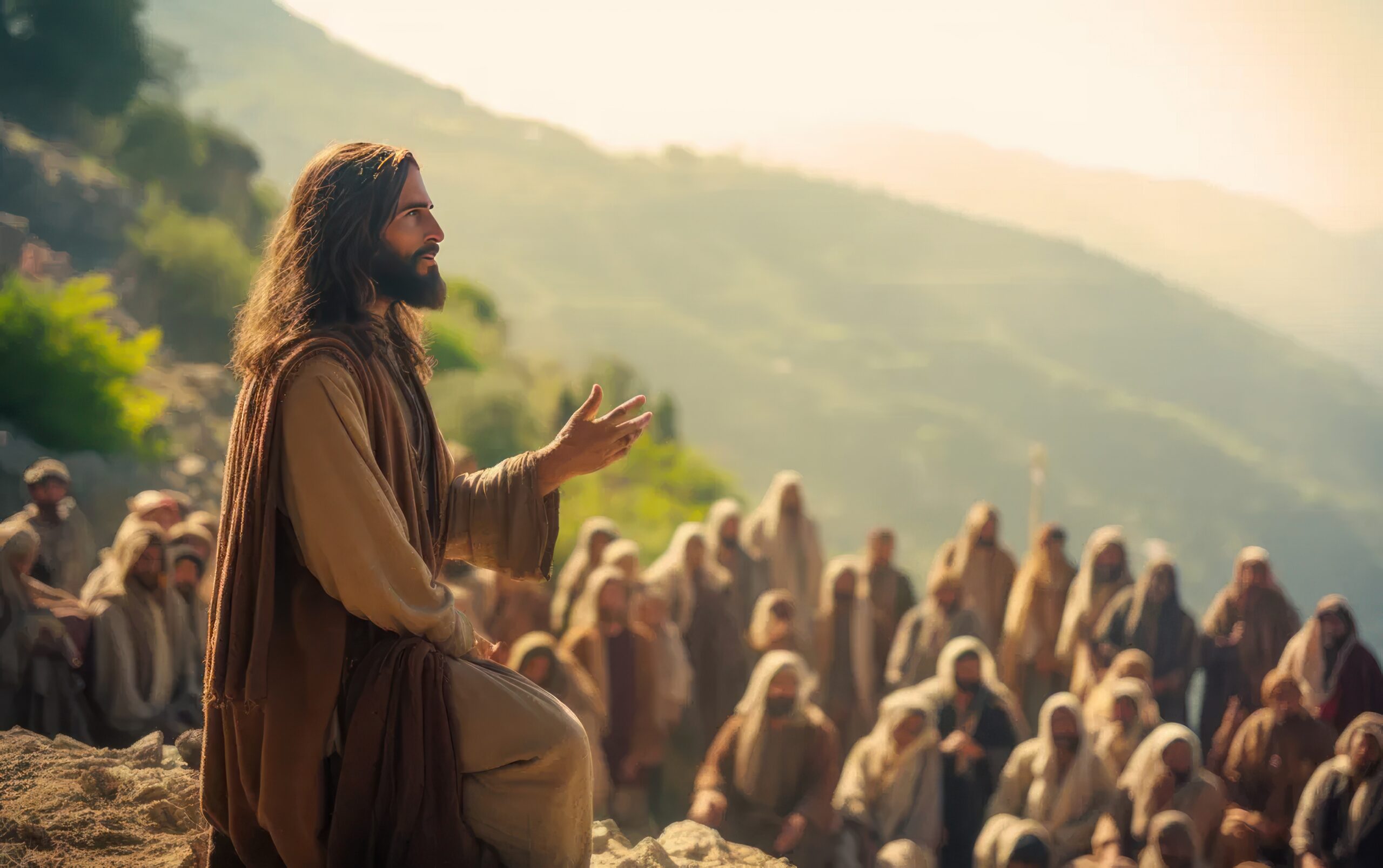 So, the Way of Jesus spread around the Mediterranean Sea following His resurrection, still as a part of Judaism. What I find especially interesting about those earliest, and often persecuted followers of Jesus is that the cross was not very important to any part of their shared teachings. For example, there were eventually millions of burials of those earliest followers of Jesus in the Roman Catacombs. But in those first few centuries, before Constantine seized upon the cross as his personal symbol, not a single depiction of a cross inside the Catacombs can be found! Which is a pretty strong indication that until Constantine saw a cross in the clouds and decided to make it the centerpiece of his new religion, the cross was not what the Judaism-based Way of Jesus was all about. Instead, what was commonly depicted in those Roman Catacombs among all those burials were paintings of a young Jesus as a shepherd boy with olive skin and a crown of curly hair who carried not a young sheep, but a baby goat around His shoulders.Jesus loves all creatures, without exception.
 There is a telling phrase used in the Acts of the Apostles to describe this new Jewish sect that was upsetting the old-world order in Thessalonica. Jesus’s followers there were dragged before the city councilors. “6 When they could not find them, they then dragged Jason and some brothers and sisters before the city authorities, shouting, “These people who have been turning the world upside down have come here also, 7 and Jason has entertained them as guests. They are all acting contrary to the decrees of the emperor, saying that there is another king named Jesus” (Acts 17:6–7). Of course, no one is called before a city council for mere inner beliefs unless they are also upsetting the social order. Almost all of Jesus’s healings and natural miracles were a rearranging of social relationships, and therefore of the established social order. By eating with the underclass, touching the untouchables, healing on the Sabbath, and collaborating with upstarts like John the Baptist down at the river, He turns the traditions of His society upside down. Because Jesus refuses to abide by the honor-and-shame system that dominated the Mediterranean culture of His time, He refuses to live up to what is considered honorable, and refuses to shame what people consider shameful. This does not gain Him many friends! It is perhaps the thing that most bothers the priests and the elders. In response to His ignoring the debt codes and purity codes, they decide to find a way to kill him, if they can.
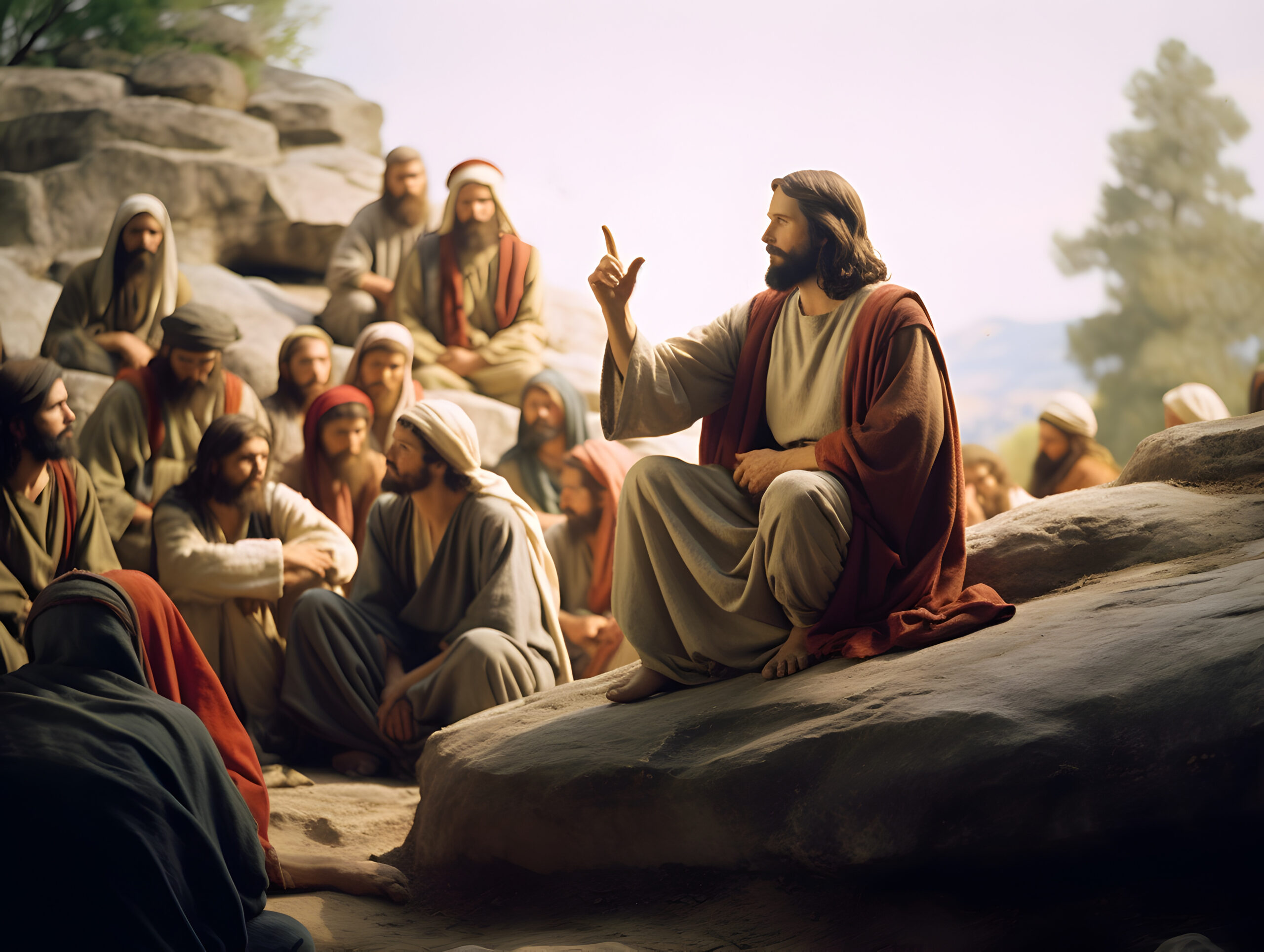 In a primitive honor-and-shame system, a person’s status and meaning are achieved through how other people see them. The system around Jesus didn’t ask individuals to think in terms of “Who am I really before God?” or “What do I feel about myself?” but rather, “How does my village see me?” Many cultures to this day are built on some kind of honor-and-shame system. A person’s meaning and self-esteem is almost entirely tied up in how their family and friends see them. It’s a highly effective means of social control. In New Testament times, shame and honor were in fact moral values that people felt compelled to follow. If a situation called for retaliation, one must retaliate. Not to retaliate would have been considered immoral, because it would have meant abandoning the honor of the individual, their family, and perhaps even their entire village. For Jesus to say, “Do not retaliate,” was to subvert the whole honor-and-shame system.
 Once challenged to live outside their cultural systems, Jesus’s listeners were given a new place to find their identity: in God. Who we are in God is who we are. That’s the end of ups and downs. Our value no longer depends upon whether our family or village likes us, whether we are good-looking, wealthy, or obedient to the laws. Jesus’s message is highly subversive in an honor-and-shame society! Yet, as Jesus takes away their old foundations, He offers a new, more solid one: neither shame-based nor guilt-based, but rather love-based. A person’s whole identity can now be based in who they—and we—are in relation to God.
These are immensely dangerous teachings in that old shame- and guilt-based world! We can see in the Biblical Gospels that it was when they began to see the full change that these teachings that Jesus had brought were making in people’s lives that the Jewish priests and teachers began to seek ways that they might remove, or even kill Him. See, for example, “The Pharisees went out and immediately conspired with the Herodians against Him, how to destroy Him” (Mark 3:6), and 7 “Every day he was teaching in the temple. The chief priests, the scribes, and the leaders of the people kept looking for a way to kill him” (Luke 19:47).
 When I was meeting with Jesus in the astral plane fairly often in the spring of 2022 while my material body slept in my earthly bed, and Jesus was explaining to me His original Easter plan to die by crucifixion, then with God’s still reluctant help, to be resurrected, and to thereby prove to all of humankind that our lives are universally eternal. Of course, I had so many questions for Him! Since God had forbidden Him, a Holy Being born from out of the Godhead, to so demean Himself as to allow Himself to be crucified, did He ever have a moment when He worried that God wouldn’t play God’s assigned part in His plan? Jesus told me that, no, He only had cried out to God from the cross a couple of times, and at once God had been there for Him, despite God’s professed reluctance. Which was true! Jesus had to die before sunset, or else the guards would break His legs to hasten His dying, and His resurrected body would then be unable to walk, and therefore it would be less useful to Him; so He called out to God, and His life was promptly ended. Jesus said to me, “The part that God had to decide to do all on God’s own was the resurrection of that body, to prove to the people that their lives would go on after their bodies died. Think about it! I was safely with God by then. He didn’t have to resurrect that body for me. But, my Little One, I know My Beloved Father so well! He never would have failed to give that gift in love to all of humankind!”
Ah, yes. And the marks left on the Shroud of Turin suggest that the power that God used to resurrect the body of Jesus was greater than the sum of all the power that could be produced by all the human-created sources of power on earth, even today, all put together! As Jesus very well always knew, God loves us very much indeed. But how can we reconcile Jesus’s steadfast adherence to the Jewish Law of Moses with His newly-taught, perfect Law of Love? Next week, we’ll try to make all of that make sense to you.
I’d stay in the garden with Him,
Though the night around me be falling,
But He bids me go; through the thought of woe
His voice to me is calling.
And He walks with me, and He talks with me,
And He tells me I am His own;
And the joy we share as we tarry there,
None other has ever known.
– Charles A. Miles (1868-1946), from “In the Garden” (1913)
(Most photos are from Vecteezy.com)












Hi Roberta,
Even if the Romans had broken Jesus’ legs, God would have restored them when he resurrected. Don’t you think?
Chris
Well, for certain quite possible, my lovely Chris B., but in terrible pain as Jesus was on the cross right then, I’m not sure that He was thinking so clearly! What Jesus was thinking was mostly just that the afternoon was wearing on, and here came the soldiers to start breaking legs, and God was supposed to let Him die about now!!
best song ever,and Jesus is our best friend and brother love him,and you guys rock too thank you for your service ,be blessed.
You have made me smile, my darling Sarah! You for certain rock as well, my very dear one!!
Thank you Roberta 🙂 I’ve heard other testimony, one of Dolores Cannon regressing someone who was Jesus teacher, saying that he had passed away, but looked at that moment that Jesus died, and saw his astral body walking with his mother after he died and that has stuck with me. One question I have, is about James. Was James his brother who he talked to while on the cross, saying in John 19:26–27, behold your mother, surely this was James? James seems to have a played a much larger role than the roman bible we have has shown. As of course did Thomas.
My dear wonderful Adam W., you are quite perceptive! My Thomas, who was Jesus’s older brother in His last earth-lifetime that He lived before ascending and who is now my primary spirit guide, has told me that one of Jesus’s Apostles, called James the Greater, had been the youngest of the three brothers in that last lifetime that Jesus lived before He became an ascended Being, some six thousand years ago.